Tuesday, July 19, 2011
Thursday, June 30, 2011

Wednesday, June 29, 2011


Monday, June 20, 2011


Monday, April 18, 2011
Wednesday, March 30, 2011
Happy Doctors Day!

Happy Doctors Day!
A day to celebrate the great doctors in the
world and the great doctors at Republic Spine and Pain.

Thursday, March 10, 2011
Austin Pain Doctor Reviews
My Dear Dr. Yeh,
I did not hold a lot of hope for ever receiving any true relief for my lower back pain
without daily drug therapy. I had suffered a neck injury that eventually required surgery and the recovery was long and painful and required daily pain medication and physical therapy I am self employed so this situation nearly bankrupted me. It took about 18 months after surgery to return to work. I never quite recovered financially from that ingury.
When I was injured these years later I was expecting about the same experience. I was sure this lower back injury would be the end of me financially and would have to be drugged every day to manage the pain. The thought of all this brought me to tears everyday.My chiropractor sent me to Dr. Yeh after months of treatment with little result. I WAS NOT OPTIMISTIC! I had consigned myself to living with this pain POSSIBLE FOR THE REST OF MY LIFE!! I met with Dr.Yeh and he went right to work. The treatment that he recommended WORKED WITHIN A FEW DAYS and relieved my pain by about 80%
I am now back to work full time.
Gratefully,
Sandra C
_______________________________________________________________________
They make me WANT to go to the doctor!!
by sharona nichols at Citysearch
i can't tell you how much i HATE going to the doctor...but i don't hate my doctor at all, i really liked her, but now i LOVE her because she referred me to Dr. Ostadian at Republic Spine & Pain.i had let the pain in my lower back get unbearable because of my disdain for doctor's offices. i finally go see her and she thinks it's a pinched nerve, so she prescribes pain killers, muscle relaxers, and steroids. 2 days later i was even WORSE so i called my doc and she called Republic, then a VERY nice woman called me a few minutes later and said i should come in right away. seriously...they got me in to see Dr. Ostadian within an hour of my tearful call to my doctor.
He sent me for an MRI and his suspicions were correct, i had a herniated disc. the next day, he shot some sort of magic juice into my spine and HOLY WOW PEOPLE! i think i'm cured!! okay, it's only been a little over a week, and i go in for a follow up in a couple of days, and i know that i have to do physical therapy and take care of myself so that this doesn't happen again...but i just can NOT get over the fact that i went from not being able to walk, sit, or even lie down without excruciating pain shooting down my leg - to absolutely NO PAIN and back at work in less than two days of the steroid injection he gave me.
And the staff...they are unbelievably nice. i have never received such caring...well, CARE. On my first visit, this person i'd never met before was helping me walk to the exam room, and then she held my hand and helped me climb up on that stupid high exam table/bed thing because i told Dr. Ostadian that i could only stand or i would cry from the pain. And then the day of the procedure, Mona sat with me and went over everything so personally, that i forgot that i was just signing releases and stuff. The day after, Dr. O called me himself to check on me. Again, i am just blown away by the caring and compassion of the entire staff...i get a little emotional just thinking about it.
Pain is a big frikkin' deal, and these people care that you hurt, they do not treat you like a number or an insurance policy. i have never given 5 stars before, ever. but if you end up here, you will understand.
also, for the first time in my life, i'm looking forward to a visit to a doctor's office.
_______________________________________________________________________________
Absolutely Great
by kevincedarpark at Citysearch
We have been very pleased with the service we received from Dr Ostadian and his team.I came to his office on November 16th with extreme pain in my neck and radiating down my left arm with my hand partially numb. He did some tests, indicated that he could help with some of the pain, but we needed to have an MRI done quickly because he was certain that there was something seriously wrong. The MRI was done yet that day and he received the results back late in the afternoon and the results were not good.
He contacted me that evening and had already consulted my situation with a surgeon and made arrangements for me to see the surgeon on Thursday. I had surgery on Friday November 19th in the afternoon and have been recovering since then.
Dr Ostadian and his team have been keeping track of my progress ever since. I would recommend the Republic Spine and Pain P.A to anyone needing to have pain relief.
Their hands on caring team was absolutely great.
Wednesday, February 16, 2011
5 Minute relaxation exercise
check out the American Chronic Pain Association’s free five-minute relaxation guide.
http://www.theacpa.org/videoPlayer.aspx?gid=relax
http://www.theacpa.org/videoPlayer.aspx?gid=relax
Saturday, January 15, 2011
Wednesday, January 12, 2011
Chronic pain: The enemy within
By Steve Sternberg, USA TODAY
Mary Vargas spent her last pain-free moments driving down a country road to visit a Connecticut flower farm. She was 23 and newly married, a law student about to start a summer job. It was the day after Independence Day, 1996.
It also was the day her independence from doctors and hospitals would end. Vargas stopped to make a left into the parking lot. A driver who was admiring the scenery plowed into the rear of her car. Vargas' head whipped back and forth like a ball on a spring, damaging her spine. The injury transformed her into one of millions of Americans tormented by chronic pain.
"My husband describes pain as almost being a third person in our marriage," she says.
As many as 40 million people may share Vargas' plight. A new USA TODAY/ABC News/Stanford University Medical Center poll indicates that 19% of American adults — almost 1 in 5 — say they suffer from chronic pain; 44% have acute, or short-term, pain. Half of the 1,204 respondents cite the source of their discomfort as a medical injury or condition such as joint pain, heart disease or cancer. (The poll's margin of error is plus or minus 3 percentage points.)
"The problem is absolutely enormous," says Russell Portenoy, chairman of pain medicine at New York's Beth Israel Medical Center. "It rivals every serious public-health issue, whether you're talking about heart disease, cancer, obesity or anything else."
Still, the burden of pain will grow as the population ages. More than half of patients reporting chronic pain were older than 55.
A study of pain's effect on worker productivity reported in The Journal of the American Medical Association in November 2003 calculated the cost in the USA at more than $62 billion a year from reduced performance alone. Add in the cost of treatment and lost workdays and the total climbs to an estimated $100 billion, according to the American Pain Foundation.
The psychological effects of pain amplify the trauma, contributing to depression, anxiety, sleeplessness and suicide. "Many people in severe pain from terminal illness fear their pain more than they fear death," says Scott Fishman, chief of pain medicine at the University of California-Davis.
Despite the burden that pain imposes on society, pain relief has long been a stepchild of medicine. Many pain medications derive from aspirin and opium, whose origins date back 2,000 years.
Pain medicine isn't recognized by the American Board of Medical Specialties as a primary medical specialty on par with cardiology, oncology or anesthesiology.
The American Board of Pain Medicine has taken the lead in educating and credentialing pain medicine specialists. So far, the board has certified just 1,700 doctors as pain specialists. That's about one pain specialist for every 23,500 people who need care.
With specialists so rare, many pain patients are cared for by doctors who lack training and experience in the appropriate use of a range of pain therapies, among them drugs, spine stimulators and implanted pumps, and alternative therapies, including acupuncture.
From doctor to doctor
Patients hopscotch from doctor to doctor for years before they're given an accurate diagnosis, pain specialists say, and it may take even longer to find appropriate care.
"I always ask my incoming patients, 'How many physicians have you gone to with this complaint?' " says B. Todd Sitzman, medical director of the Center for Pain Medicine in Hattiesburg, Miss. "It's unusual to see someone who hasn't gone to at least three other physicians looking for answers."
The upshot, doctors say, is that patients suffer. The survey bears this out. Of those surveyed who sought care, 90% reported that the doctor understood their pain problem well, but just 30% reported getting a "great deal" of relief.
Vargas, of Emmitsburg, Md., now a health discrimination lawyer, suffers from overwhelming pain, possibly because doctors who weren't trained in pain medicine told her to wait six months to see whether her injuries would heal. By then, it was too late. Fishman and other experts say it is critical to intervene immediately and break the pain cycle before the nervous system loses its ability to turn the pain off.
After a year of waiting, Vargas began an agonizing odyssey from doctor to doctor, hospital to hospital. Finally, one of her three physical therapists referred her to a pain specialist. He recommended that she allow surgeons to implant a spinal cord stimulator, an electrical device that sends a signal to electrodes at a point above the damaged nerve and interferes with transmission of the pain signal.
"I was on a number of medications, but after we got the stimulator working, I was able to drop all but one," says Vargas, who still takes a narcotic called fentanyl. "I was able to have a baby and do all kinds of things I couldn't imagine doing without the stimulator." The couple's son, William, is 2½ .
"The pain of childbirth has a beginning and an end and a positive result. With chronic pain, there is no end," Vargas says.
The science of pain
The more researchers delve into the nature of pain, the more they realize how complex the pain network is. "There's more to pain than we ever dreamed of," Fishman says. "Whenever we think we've found an answer to the puzzle, we realize there are more questions."
In someone with a healthy nervous system, pain can be a lifesaver — a sentinel on duty to warn of potential risks and prompt protective responses.
Gabrielle "Gabby" Gingras, 4, of Elk River, Minn., illustrates how important pain can be.
The playful little girl is one of very few children in the world with a genetic defect called congenital insensitivity to pain. She lacks the nerves to warn her that the knife is sharp or the glowing coil on the stove is burning her hand.
The first inkling of this came the day after Gabby was born, when a nurse pricked her heel for a blood test and she slept through it. Then, when she began teething, she chewed her tongue and knuckles to a pulp. Rubbing her eyes has left her blind in one and with 20/300 vision in the other. When she broke her jaw, which had been weakened by an infection, it took a month for her parents to realize it.
"We're trying to teach her to blink her eyes and bend her knees when she jumps," says her dad, Steve, 40. "We're trying to teach her to tell when water's too hot."
People with congenital insensitivity to pain often don't survive past middle age, doctors say. They are often crippled, their lives cut short by injuries and infections.
Gabby's mom, Trisha, 39, says she finds herself envying mothers of children with cancer. "If they go five years and beat it, they're done. With Gabby, it's never going away."
The couple, who also have a healthy daughter named Katie, created a foundation to be a networking tool for families whose children have similar conditions. Its name: "The Gift of Pain."
The pain-sensing nerves that Gabby lacks are the tiniest and most vulnerable, because they have the least insulation. The nerve endings are called nociceptors. The highest concentrations are in the areas needed for survival, especially the head, mouth, hands and feet. When they encounter a stimulus, such as a pinprick, they send a message through trunk cables to a part of the spinal cord called the dorsal horn. This is the switchboard that relays pain signals to the brain. It uses a second nerve network to relay everyday sensations.
If you prick your finger on a rosebush, nerves carry signals to the brain, the brain pinpoints the location of the injury and sounds an alarm to pull back to prevent further damage. It sensitizes a wide area around the injury to expand the perimeter of protection. And it signals the body's pharmacy to produce its own potent natural painkillers called endorphins.
These chemicals, produced in cells throughout the body, act just like morphine and offer temporary relief from pain.
But sometimes the system goes haywire. In some cases, when nerves are injured, the wires for pain and everyday sensations cross. It can occur after an injury or spontaneously. It occurs in shingles, because the virus that causes the illness, varicella, nests in the nerves. Nerves for everyday sensations are co-opted into the pain system, transforming mild sensations, like the brush of a sleeve, into agony.
There is also a mental component to pain because the brain registers pain in the areas that govern emotion, Fishman says. Someone who suffers a serious injury also may feel anxiety, fear and depression, he says.
One of the most remarkable forms of chronic pain is phantom-limb syndrome. Because early humans who lost limbs couldn't survive, the nervous system has never adapted to amputations. It's as if the amputation didn't exist. The brain, it seems, can't accept such an overwhelming loss.
David Borsook of McLean Hospital in Boston is a pioneer in using magnetic resonance imaging to study phantom-limb pain. He says the brain's distortions of the pain experience are almost impossible to grasp. He tells of the time he touched a phantom-pain patient on the mouth, face, foot and stump where his arm used to be. "He was freaked out by it and said he could feel me touching the (back) of his missing hand," Borsook says.
Borsook gave him an injection to block his pain. Then he placed him in a magnetic imager that detects iron molecules in blood. By tracking blood-flow patterns, the device maps activation of regions of the brain. "If I brushed him on the affected side," Borsook says, "the one area that stood out in the imager is the area of the brain where the missing hand is represented."
Borsook and Alyssa Lebel of Children's Hospital in Boston are using the same imaging method in children to study how pain changes the physical architecture of the brain. They report witnessing entirely different brain patterns when they activate normal and abnormal nerves. The study offers a bonus for the injured children who take part. They can see that their pain is real, Lebel says. "I don't just tell them that it's in their head. I show them."
The treatment horizon
Unfortunately, efforts to treat pain have lagged behind the researchers' ability to understand it. To jump-start research, Congress five years ago declared this the Decade of Pain Control and Research. Researchers have made some strides, developing nerve stimulators like the one used by Vargas and implantable pumps that deliver morphine and other painkillers into the spine.
Researchers are making a major push to improve on opiates because they can promote addiction and because some patients must be given escalating doses or the drugs lose their effectiveness. Among the new drugs now on the market is a Lidocaine patch, made by Endo, that has proven effective against the pain from shingles.
A drug called Cymbalta not only combats depression but also eases the pain of nerve damage from poor circulation in diabetes cases. Perhaps the most interesting new painkiller, approved in December, is derived from the fish-killing toxin of the Conus magus snail.
Called Prialt, it is 1,000 times more potent than morphine and is delivered directly into the spine through an implantable pump. But Prialt has drawbacks. It causes severe dizziness and cognitive problems at high doses. Despite its potency, it works in just 50% of those who try it, says the drug's developer, George Miljanich of Elan Pharmaceuticals.
Randy Rubida, 48, of San Jose, Calif., injured his neck when his car was rear-ended by another vehicle. He says Prialt has eased the spasticity in his legs, making it easier for him to walk again. But it hasn't eased his pain much. "The pain is so intense at times I can't tell a difference," he says.
Prialt works by blocking a contact point between nerve cells called a calcium channel. Other drugs do this, too. A seizure medication called Neurontin is regarded as one of the best drugs available for nerve pain, but it isn't readily absorbed at the higher doses some patients might need for effective pain relief. A new anti-seizure drug, Pfizer's Lyrica, appears to be one of the most promising drugs yet for diabetic nerve pain and pain linked to spinal cord injury.
Fishman says medicine still has much soul-searching to do when it comes to treating pain.
"We've wandered away from the basic ethic of medicine that we cure what we can, but we alleviate suffering always. We've got to come back to our roots."
Contributing: Anthony DeBarros and Susan O'Brian
Wednesday, January 5, 2011
If YOU have Neck Pain, You have Options
Neck pain is a common problem, with two-thirds of the population having neck pain at some point in their lives.
What Causes Neck Pain?
Causes of neck pain include:- Abnormalities in the bone or joints
- Trauma
- Poor posture
- Degenerative diseases
- Tumors
- Muscle strain
What Causes Shoulder Pain?
The shoulder is a ball and socket joint with a large range of movement. Such a mobile joint tends to be more susceptible to injury. Shoulder pain can stem from one or more of the following causes:- Strains from overexertion
- Tendonitis from overuse
- Shoulder joint instability
- Dislocation
- Collar or upper arm bone fractures
- Frozen shoulder
- Pinched nerves (also called radiculopathy)
- Other medical conditions, such as fibromyalgia
- Cervical arthritis or spondylosis
- Ruptured disk
- Small fractures to the spine from osteoporosis
- Spinal stenosis (narrowing of the spinal canal)
- Infection of the spine (osteomyelitis, diskitis, abscess)
- Cancer that involves the spine
How Are Neck and Shoulder Pain Diagnosed?
- X-rays: Plain X-rays can reveal narrowing of the space between two spinal bones, arthritis-like diseases, tumors, slipped discs, narrowing of the spinal canal, fractures and instability of the spinal column.
- MRI:Magnetic resonance imaging is a noninvasive procedure that can reveal the detail of neural (nerve-related) elements.
- Myelography/CT scanning: Sometimes used as an alternative to MRI
- Electrodiagnostic studies:Electromyography (EMG) and nerve conduction velocity (NCV) are sometimes used to diagnosis neck and shoulder pain, arm pain, numbness and tingling.
How Are Neck and Shoulder Pain Treated?
The treatment of soft tissue neck and shoulder pain includes the use of anti-inflammatory medication (such as Aleve or Motrin) and/or acetaminophen (Tylenol). Depending on the source of pain, drugs like muscle relaxers and even antidepressants might be helpful. Pain also may be treated with a local application of moist heat or ice. Local corticosteroid injection is often helpful for arthritis of the shoulder. For both neck and shoulder pain movement exercises may help. Sometimes neck pain can signify something more serious. Seek immediate medical care from our Austin Pain Doctors if you experience:- Shooting pain into your shoulder or down your arm
- Numbness or loss of strength in your arms or hands
- Change in bladder or bowel habits
- Inability to touch your chin to your chest
Injection Therapies
There are many types of spinal injections available to diagnose and treat different disorders. A sampling includes:
Epidural Injections and Nerve Root Blocks consist of anesthetic and steroid medications that are injected into the epidural space of the spine. Such injections are used to help diagnose a condition and/or relieve pain. An epidural injection is often performed to ease pain that radiates into the arms or legs.Facet Joint Injections and Medial Branch Blocks help to determine if the facet joints are the source of pain. Besides their value diagnostically, such injections may help reduce cervical (neck), thoracic (chest area), and lumbar (back) pain.
Sacroiliac Joint Injections target relief at the joints in the lower back where the pelvis and spine join. The injection offers a two-fold purpose. First, the medication (anesthetic and steroid) helps to reduce joint inflammation and pain. Second, it can help determine if the sacroiliac joint(s) are the pain source.
Other Invasive Options
Pulsed Radiofrequency Neurotomy (PRFN) is a minimally invasive procedure that disables spinal nerves and prevents them from sending pain signals to the brain.Surgical Interventions
Rhizotomy is a procedure that 'turns off' pain signals by using heated electrodes applied to specific nerves that carry pain signals to the brain.
Spinal Cord Stimulation (SCS) and Intrathecal Pumps are advanced invasive pain management options. These are usually performed on a trial basis first to determine if the patient will benefit from treatment.
Spinal Cord Stimulation (SCS) produces electrical impulses to block pain from being perceived in the brain.
An Intrathecal Pump is a surgically implanted device that delivers a measured amount of pain medication within the spinal canal.
Surgery is always the last resort, unless the patient's condition warrants immediate surgical intervention (e.g. bowel, bladder or profound neurologic dysfunction). When non-surgical treatments are not effective, spine surgery may be considered. Percutaneous Discectomy/Nucleoplasty is a minimally invasive surgical procedure that removes disc tissue and relieves pressure from spinal nerves. There are other types of spine surgery; some are complicated and may require spinal instrumentation and fusion procedures.
To learn more call our office make your appointment.
New patients are roughly one hour [ yes, one hour ] and you can go over your pain, medical history and options with a neck pain specialist.
Sunday, January 2, 2011
Pain Management - Foods That Help Ease Pain
Pain - something that no one wants to experience even once let alone daily and yet chronic pain is not uncommon. The Chronic Pain Association estimates that 50 million Americans endure chronic pain on a daily basis. Whether you suffer from Fibromyalgia Arthritis, or a Sports Injury, pain from the inflammatory response finds us and can make life miserable. Taking anti-inflammatory medications is the first defense against chronic or acute pain. Research shows if you want to add even more relief to your pain symptoms you can make some small changes to your diet.
Foods that have the greatest effect on the inflammatory process are fats. The predominant omega-6 fatty acids present in the American diet tend to promote inflammation while omega-3 fatty acids help to inhibit the inflammatory process. The omega 6 to omega-3 ratio in the Western diet is a high 16:1.8 leading some researchers to say the typical Western diet is a pro-inflammatory diet. No wonder we are in such pain! Even though omega-6 fatty acids are good for us and needed in the diet, we are eating far too many of them and not eating enough of the health-promoting omega-3's. Omega-6 fatty acids are found in beef, pork, chicken, whole milk dairy products, egg yolks, vegetable and seed oils, and packaged convenience foods- all staples of the American diet. The pain reducing Omega-3 fatty acids are found in cold water fish (salmon, mackerel, halibut, and tuna), ground flax seeds, canola oil, and walnuts.
There is one more fatty acid to throw into the mix and that is omega-9. Not as much of an attention getting fatty acid but just as important to know about. These fatty acids are also involved in prohibiting the inflammation process bringing relief to its sufferers. Omega-9's are found in olive oil, avocados, pecans, almonds, peanuts, cashews, sesame oil, pistachio nuts and macadamia nuts. All those nuts you thought were off limits, not anymore. Just make sure you only eat 10 - 12 nuts for a serving size so you don't add to your waistline with these high calorie snacks.
Fruits and Vegetables- ah, here they are again. I wonder how long it will take us to realize they really are good for us. The antioxidants found in fruits and vegetables play a role in decreasing damage by free radicals which to you and I means it prevents the initiation of the inflammatory response nipping it in the bud. What's the recommendation? The same as it's always been, 5-8 servings of fruits and vegetables each day. It's not as tough as it seems. A serving size of fruit is the size of a tangerine or half of a banana while the serving size for vegetables is ½ cup cooked and 1 cup raw. Add some berries to your cereal, some vegetable soup with lunch or sneak veggies into your scrambled eggs, add them wherever you can.
Although this doesn't count as a legitimate study, my mother, a long time arthritis sufferer decided to put some of these ideas into practice. She decided to take 2 tbsp. of ground flax seeds per day which she added to her oatmeal in the morning. She also added almonds regularly. That was it. No other changes and she found her arthritis pain markedly decreased. It goes to show that small nutrition changes can make a big impact on your health.
Now that you know the information, let's get practical. Here are 8 small diet changes you can make starting this week to decrease inflammation.
1. Replace chicken, pork or ground beef with salmon, mackerel, or halibut 2 times each week.
2. Use canola or olive oil in place of other vegetable oils for salad dressings and cooking.
3. Add walnuts, almonds, or pecans to salads.
4. Snack on an ounce of cashews or macadamia nuts with a piece of fruit.
5. Use sliced avocado in your sandwich in place of the cheese.
6. Use omega-3 fortified eggs (can find at all local grocery stores: look for the sentence: fed with DHA and EHA).
7. Add 2 tbsp of ground flax seeds to your oatmeal or yogurt.
8. Add a side salad each night with dinner (filling up with veggies during your meals will also help with weight management).
Using medications alone to manage your pain is difficult because most drugs eventually lose their effectiveness and can cause side effects. Take some small steps to add these dietary practices so you can have a more complete support system to alleviate pain.
Owner of Real Living Nutrition Services, Meri Raffetto is a recognized professional in the area of nutrition and wellness. She specializes in weight management and cardiovascular nutrition and offers online programs to help people reach their weight loss and health goals. For more information visit
Article Source: http://EzineArticles.com/?expert=Meri_Raffetto
|

Friday, December 24, 2010
Why so I have Pain?
- At some point in their lives, 80% of Americans will experience back pain.
- You can injure your back by coughing or sneezing.
- If you have a sprained or strained back—not a serious injury—use ice to help reduce swelling, muscle spasms, and pain for the first 24 to 48 hours after you injure your back.
- If you have a sprained or strained back-not a serious injury-use ice first. After 48 hours, switch to heat to warm and relax sore tissues.
- Good posture is one of the best ways to avoid straining your spine.
- Exercising on a regular basis helps you maintain a healthy spine.
- Each year, back pain costs Americans about $100 billion in medical bills, disability, and lost productivity.
Wednesday, December 22, 2010
Merry Christmas From Republic Spine and Pain
Wishing all our patients a Wonderful Christmas.
We Hope the New Year brings you all wellness, joy and enlightenment.
Happy Holidays!

Sunday, December 19, 2010
Tips to Prevent Back Pain
In previous blogs we have dicussed the correct and incorrect way to lift objects and exercises to strengthen back muscles. Here are some TOP TIPS of things to be mindful of...
- Protecting Your Back in Bed
You'd think it would be difficult to injure your back while sleeping. While unconscious your muscles are relaxed and you're not lifting or carrying anything. But the truth is, if you have a bed that does not offer your back enough support, it could be the reason why you wake up with back-stiffness. Also, if you are in a position that is bad for your back and you stay in it for eight hours while you sleep, you could be damaging your back without knowing it.
- Protecting Your Back in the Morning
While you're getting ready in the morning to start your day there are a host of bad habits that could put stress on your back. For instance, when you stand at the sink, brushing your teeth, do you support your back? There's nothing like starting out your day on the right foot.
- Protecting Your Back in the Car
Many of us spend a significant portion of our days in the car. Strangely, little though is given to how comfortable we are in our cars, or what damage our car seats could be doing to our backs.
- Protecting Your Back at Work
Your office is like your home-away-from-home. Yet, almost not consideration is given to how comfortable you are while sitting at your desk. The wrong type of chair, a keyboard or monitor that is positioned at the wrong angle, or just sitting in one position for too long can all add up to significant back problems.
- Protecting Your Back While Exercising
It's a vicious cycle. If your back hurts, you will probably stop exercising. But if you stop exercising, you are more likely to injure your back. Even if your back is bothering you, it is important to get at least a little exercise. Movement keeps the joints in your back lubricated and loose.
- Stretches for Your Back
Keeping your back flexible is a big part of keeping your back injury-free. When your back tightens up, you are more likely to pull or strain a muscle.
- Exercises for Your Back
Though we told you earlier how to exercise without injuring your back, what we did not do is show you exercises to specifically strengthen your back. The muscles in your back not only support the spine, but they hold up your entire upper-body. Your back muscles need both strength and conditioning to perform their functions properly.
- Protecting Your Back While Lifting
Most people who throw out their back do so by attempting to lift an object incorrectly. Lifting puts more stress on your back than any other activity -- with the possible exception of carrying.
- Protecting Your Back When Moving Objects
Transporting or carrying an object may not provide the immediate, traumatic stress that comes when trying to lift an object, but it can do just as much damage to your back. There are several techniques you can employ to help you move objects that won't result in a trip to the emergency room.
- Diet and Back Pain
Watching what you can eat can also help protect your back. Most obviously, if you do not carry a lot of weight on your front, it will take a lot of strain off of your back muscles. But in addition to the benefits of maintaining a healthy weight, the right foods can also prevent back injuries. If you are tired and fatigued from lack of nutrition, you are much more likely to pull a muscle or acquire another back injury.
- Stress and Back Pain
Stress and tight muscles go together hand-in-hand. If you are carrying a lot tension in your upper back and shoulders, you are ripe for a back injury.
Thursday, December 16, 2010
Smoking and Back Pain
Low back pain affects 80 percent of us at some point in our lives. As a result, researchers are working diligently to determine what factors contribute to this pain. Some of the factors that have been identified include an occupation requiring a heavy physical workload, low levels of leisure physical activity, high body mass index, living in a small community, having a low educational level and being a smoker. While some of these factors may seem like common sense, some may be more surprising to you. The primary goal of this article is to present some evidence as to the effects smoking has on back pain and some possible explanations as to why.
It would seem logical that the more demand an activity or load places on the spine, the more likely it is that the spine may become injured. If the spine is injured, pain is likely to result. This is the obvious explanation as to why high body mass index and heavy occupational workloads tend to be associated with low back pain. However, an important factor with chronic loading of any part of the body is how well the body can recover or heal from the small damage caused by the loading. Ideally, the body heals a little stronger than it started and is more resistant to that same load in the future. If the body is not able to heal sufficiently, further injury develops. The key to healing is providing sufficient time between when the demand is placed on the body and the area of the body having enough blood supply to provide healing. An example of the time factor is a blister on your foot. Given enough time the blister will heal and the foot will be ready for taking stress once again. If the stress that created the blister is small and time is given between when the stress is applied, a callous forms instead of a blister. The body adapts instead of being injured. In the case of blood supply, think of the inside of your lip. This area has a rich blood supply and if cut will heal quite fast. The spine is similar. If it has a good blood supply, it will adapt to the physical demands placed on it. If the demand is too great, damage will occur.
One of the chief effects of smoking on the spine is that smoking contributes to atherosclerosis. Atherosclerosis is when plaque or other material builds up on the inside of blood vessels, causing decreased blood supply especially to areas that are fed by very small vessels. The bones and discs of the spine are supplied by these small vessels and are affected by atherosclerosis which decreases the spine’s ability to heal itself. This eventually leads to degeneration of the spine and the onset of pain. In this way, smoking increases the risk of developing atherosclerosis related to back pain [Source: Kaupplia, Leino-Arjas].
Also related to the spine’s ability to heal is the role of a bone cell called an osteoblast, a specialized cell the builds bone tissue. Nicotine is a major chemical in smoking that contributes to its addictive properties. However, nicotine also inhibits the activity of osteoblasts [Source: Glowacki]. Decreased osteoblast activity from nicotine causes the bones of the spine to have a reduced ability to rebuild. Over time, the bone is used up faster than it can be rebuilt causing osteoporosis and other degenerative conditions causing pain.
Another connection that has been made between smoking and low back pain is the message of pain itself. Smokers have been found to have higher ratings of pain than nonsmokers [Source: Ackerman, Scott, Vogt]. While the exact reasons for this are not entirely clear, it appears to have some connection with chemical interference with the body’s natural hormonal activity for pain detection. Essentially, the hormones and chemicals that help the body deal with pain are inhibited by smoking.
Other questions about smoking include whether smoking has an effect on intervertebral discs or on neck pain. At this time there is no conclusive evidence of smoking causing either of these conditions [Source: Gore, Leboeuf-Yde]. We may find that there is a link with further research. However, even if it is found that smoking does not cause disc problems or neck pain, the fact remains that smokers will tend to have more feelings of pain if there is an injury caused by something else.
The body is a remarkably resilient system. It can adapt and heal. However, it is also susceptible to harmful influences. It is up to each of us to take care of our own bodies and limit those harmful things by the choices we make. Smoking cessation, exercise and an improved diet are all personal decisions and habits that can be improved. Your body will thank you.
Sources
- Ackerman WE 3rd, Ahmad M. Effect of cigarette smoking on serum hydrocodone levels in chronic pain patients. J Ark Med Soc. 2007 Jul; 104(1): 19-21.
- Bjorck-van Dijken C, Fjellman-Wiklund A, Hildingsson C. Low back pain, lifestyle factors and physical activity: a population based-study. J Rehabil Med. 2008 Nov; 40(10):864-9.
- Freedman MK, Sauline MF, Overton EA, Holding MY, Kornbluth ID. Interventions in chronic pain management: approaches to medication and lifestyle in chronic pain syndromes. Arch Phys Med Rehabil. 2008 Mar; 89(3 Suppl 1):556-60.
- Glowacki J, Schulten AJ, Perrott D, Kaban LB. Nicotine impairs distraction osteogenesis in the rat mandible. Int J Oral Maxillofac Surg. 2008 Feb; 37(2):156-61.
- Gore DR, Carrera GF, Glaeser ST. Smoking and degenerative changes of the cervical spine: a roentgenographic study. Spine J. 2006 Sep-Oct; 6(5):557-60.
- Kaupplia LI. Atherosclerosis and disc degeneration/low back pain - a systematic review. Eur J Vasc Endovasc Surg. 2009 Mar 25.
- Leboeuf-Yde C, Kjaer P, Bendix T, Manniche C. Self-reported hard physical work combined with heavy smoking or overweight may result in so-called modic changes. BMC Musculoskelet Disord. 2008 Jan 14; 9:5.
- Leino-Arjas P, Solovieva S, Kirjonen J, Reunanen A, Riihimaki H. Cardiovascular risk factors and low-back pain in a long-term follow-up of industrial employees. Scand J Work Environ Health. 2006 Feb; 32(1): 12-19.
- Mikkonen P, Leino-Arjas P, Remes J, Zitting P, Taimela S, Karppinen J. Is smoking a risk factor for low back pain in adolescents? A prospective cohort study. Spine. 2008, Mar 1;33(5): 527-32.
- Scott SC, Goldberg MS, Mayo NE, Stock NE, Poltras B. The association between cigarette smoking and back pain in adults. Spine. 1999, Jun 1;24(11):1090-98.
- Vogt MT, Hanscom B, Lauerman WC, Kang JD. Influence of smoking on the health status of spinal patients: the National Spine Network database. Spine. 2002 Feb 1;27(3): 313-19.
For support groups in Austin to help quit smoking, visit these websites :
http://organizedwisdom.com/Smoking_Cessation_in_Austin
http://stopsmokingsimplified.com/SupportGroupsDetails.aspx
Monday, December 13, 2010
Be a Fan of Austin's Republic Spine and Pain on Facebook!
Facebookers! We value your support !
Follow Us on Twitter & Fan us on Facebook
Our patients are online researchers and we have got to keep up with you!
Our Austin Pain Clinic is becoming so Tech Savvy!

Friday, December 10, 2010
Pain Management Austin -
We are very blessed to work for 2 of Austins Best Pain Management Physicians.
They are always educating staff and patients on what is available to help patients not suffer and provide options for patients to choose from.
Wanted to share our Pain physicians Bio's from our website.
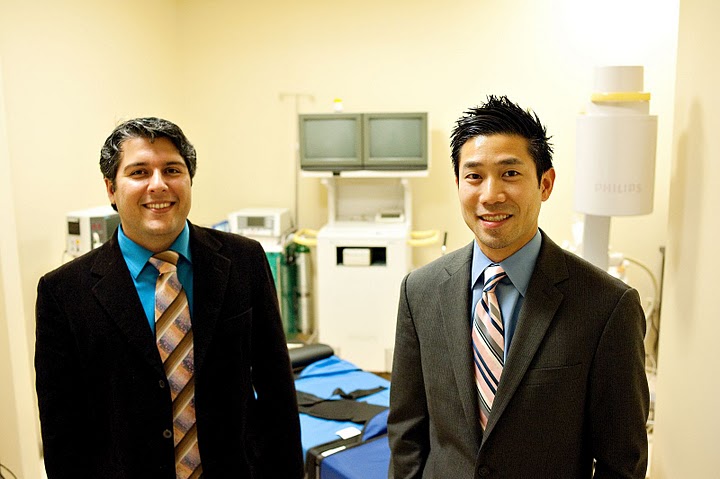
PHYSICIAN BIOGRAPHIES
Dr. Yeh and Dr. Ostadian met during their fellowship training in Dallas and realized they had a mutual vision for providing appropriate, compassionate and patient-centered care to those individuals suffering from chronic and acute pain. From there, they decided to create Republic Spine and Pain to treat those suffering from pain in the underserved areas of North Austin, Cedar Park, Round Rock and their surrounding communities.Dr. Yeh and Dr. Ostadian believe in a multi-disciplinary approach to pain management. This belief forms the cornerstone philosophy of Republic Spine and Pain’s strive to work with patients and their families to develop personalized care plans that utilize interventional techniques, medications, physical therapy, and minor surgery when indicated, to relieve pain and restore functionality.
Dr. Clement Yeh, MD
Dr. Clement Yeh has had the blessing of being a lifelong Texas resident. He was born in Dallas, TX and attended Arlington Martin High School. He then attended Baylor University on a Presidential and Premedical scholarship where he obtained a degree in biology and a minor in chemistry. In addition to being a member of Sigma Alpha Epsilon fraternity, he was also a 4-year starter on the Baylor men's soccer team and named the team's most valuable player his senior year.Dr. Yeh then later attended Texas Tech University School of Medicine for his medical education. During this time, he had the opportunity to complete his clinical clerkships in El Paso, TX where he had the immensely rewarding opportunity to mentor University of Texas at El Paso premedical students in guiding their career choices. This is also where his love of Mexican food was born.
Later, Dr. Yeh continued his medical education at Parkland Memorial Hospital and UT Southwestern Medical Center in Dallas, TX where he completed a residency in Anesthesiology. While a resident there, he published research in cardiovascular anesthesia as well as took the opportunity to present research posters at national anesthesiology meetings.
Although Dr. Yeh thoroughly enjoyed the fast-paced and intellectually stimulating environment that anesthesiology provided, his desire for a more traditional patient-physician relationship spurred him to pursue additional training in the field of pain medicine. He chose to remain at UT Southwestern Medical Center to complete his fellowship training in interventional pain management where he was trained in the latest interventional techniques and treatments for acute and chronic pain conditions and the importance of using a multidisciplinary-guided approach to treating pain. During this time, he was also able to present cutting edge research findings at national pain society meetings.Dr. Yeh is also a Board-Certified Anesthesiologist.
When not seeing patients in clinic or practicing anesthesiology part-time, Dr. Yeh can be found playing ultimate frisbee and soccer at Zilker park as well as wakeboarding and snowboarding when the seasons permit. Although he has spent the majority of his life in the Dallas area, he is now pleased to call our state’s wonderful capital home.
PROFESSIONAL MEMBERSHIPS
- Travis County Medical Society
- Texas Medical Association
- Texas Pain Society
Dr. Mahan Ostadian, DO
Dr. Mahan Ostadian considers himself a Texas native since his early college years. He attended the University of Texas in Austin where he completed his premedical training and obtained a degree in biology. During this time, he remained active in the community while volunteering in the emergency room at Round Rock Community Hospital. He also continued his goal of becoming a physician by staying involved in Alpha Epsilon Delta pre-medical honor society at the university.Dr. Ostadian left Austin to attend University of North Texas Health Sciences Center - Texas College of Osteopathic Medicine in Fort Worth to complete his medical degree. While obtaining a solid foundation in the basic sciences, he also learned the interrelationship of the body's nerves, muscles, bones, and organs as well as the importance of treating the whole person. He was selected to the Dean’s List for academic excellence during this time.
Next, Dr. Ostadian continued his medical training through completing a residency in Anesthesiology at Scott and White Memorial Hospital. He remained on staff as an Assistant Professor of Anesthesiology there after his residency and was heavily involved as part of the hospital’s pain management team in helping treat patients’ post-operative pain. Currently, he enjoys his continued involvement at Scott and White in resident education.
While working as faculty at Scott and White Memorial Hospital, Dr. Ostadian decided to pursue fellowship training in interventional pain management from the respected UT Southwestern School of Medicine and Parkland Memorial Hospital in Dallas. During his fellowship training, he was involved in several research projects and presented research posters at national pain management conferences. Dr. Ostadian is a Board-Certified Anesthesiologist with advanced training in the latest interventional techniques and treatments for acute and chronic pain conditions.
Dr. Ostadian was thrilled about returning to Austin with his wife Mona, and their daughter Alana, and hopes to make a difference in the community. Dr. Ostadian is a huge college football fan and hopes his daughter will someday have the same passion that he has for Longhorn football. He is also excited to join with Dr. Yeh who shares his goals of providing exceptional compassionate care to all of their patients.
PROFESSIONAL MEMBERSHIPS
- American Society of Anesthesiologists
- American Medical Association
- Travis County Medical Society
- American Society of Regional Anesthesia and Pain Management
- Texas Medical Association
Wednesday, December 8, 2010
Subscribe to:
Posts (Atom)