Showing posts with label pain management austin. Show all posts

Sunday, December 19, 2010

Tips to Prevent Back Pain

In previous blogs we have dicussed the correct and incorrect way to lift objects and exercises to strengthen back muscles. Here are some TOP TIPS of things to be mindful of...

  • Protecting Your Back in Bed
    You'd think it would be difficult to injure your back while sleeping. While unconscious your muscles are relaxed and you're not lifting or carrying anything. But the truth is, if you have a bed that does not offer your back enough support, it could be the reason why you wake up with back-stiffness.  Also, if you are in a position that is bad for your back and you stay in it for eight hours while you sleep, you could be damaging your back without knowing it.

  • Protecting Your Back in the Morning
    While you're getting ready in the morning to start your day there are a host of bad habits that could put stress on your back. For instance, when you stand at the sink, brushing your teeth, do you support your back?  There's nothing like starting out your day on the right foot.

  • Protecting Your Back in the Car
    Many of us spend a significant portion of our days in the car. Strangely, little though is given to how comfortable we are in our cars, or what damage our car seats could be doing to our backs.

  • Protecting Your Back at Work
    Your office is like your home-away-from-home. Yet, almost not consideration is given to how comfortable you are while sitting at your desk. The wrong type of chair, a keyboard or monitor that is positioned at the wrong angle, or just sitting in one position for too long can all add up to significant back problems.

  • Protecting Your Back While Exercising
    It's a vicious cycle. If your back hurts, you will probably stop exercising. But if you stop exercising, you are more likely to injure your back. Even if your back is bothering you, it is important to get at least a little exercise. Movement keeps the joints in your back lubricated and loose.

  • Stretches for Your Back
    Keeping your back flexible is a big part of keeping your back injury-free. When your back tightens up, you are more likely to pull or strain a muscle.

  • Exercises for Your Back
    Though we told you earlier how to exercise without injuring your back, what we did not do is show you exercises to specifically strengthen your back. The muscles in your back not only support the spine, but they hold up your entire upper-body. Your back muscles need both strength and conditioning to perform their functions properly.

  • Protecting Your Back While Lifting
    Most people who throw out their back do so by attempting to lift an object incorrectly. Lifting puts more stress on your back than any other activity -- with the possible exception of carrying.

  • Protecting Your Back When Moving Objects
    Transporting or carrying an object may not provide the immediate, traumatic stress that comes when trying to lift an object, but it can do just as much damage to your back. There are several techniques you can employ to help you move objects that won't result in a trip to the emergency room.

  • Diet and Back Pain
    Watching what you can eat can also help protect your back. Most obviously, if you do not carry a lot of weight on your front, it will take a lot of strain off of your back muscles. But in addition to the benefits of maintaining a healthy weight, the right foods can also prevent back injuries. If you are tired and fatigued from lack of nutrition, you are much more likely to pull a muscle or acquire another back injury.

  • Stress and Back Pain
    Stress and tight muscles go together hand-in-hand. If you are carrying a lot tension in your upper back and shoulders, you are ripe for a back injury.

Friday, December 10, 2010

Pain Management Austin -


We are very blessed to work for 2 of Austins Best Pain Management Physicians.
They are always educating staff and patients on what is available to help patients not suffer and provide options for patients to choose from.

Wanted to share our Pain physicians Bio's from our website.


PHYSICIAN BIOGRAPHIES

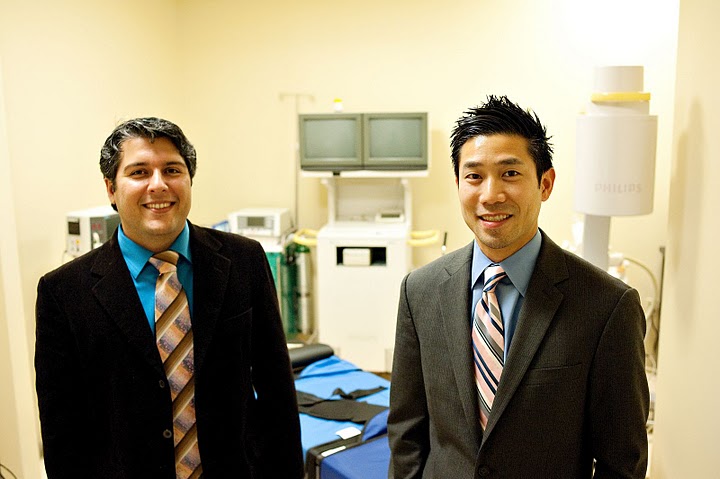
Dr. Yeh and Dr. Ostadian met during their fellowship training in Dallas and realized they had a mutual vision for providing appropriate, compassionate and patient-centered care to those individuals suffering from chronic and acute pain. From there, they decided to create Republic Spine and Pain to treat those suffering from pain in the underserved areas of North Austin, Cedar Park, Round Rock and their surrounding communities.
Dr. Yeh and Dr. Ostadian believe in a multi-disciplinary approach to pain management. This belief forms the cornerstone philosophy of Republic Spine and Pain’s strive to work with patients and their families to develop personalized care plans that utilize interventional techniques, medications, physical therapy, and minor surgery when indicated, to relieve pain and restore functionality.

Dr. Clement Yeh, MD

Dr. Clement Yeh has had the blessing of being a lifelong Texas resident. He was born in Dallas, TX and attended Arlington Martin High School. He then attended Baylor University on a Presidential and Premedical scholarship where he obtained a degree in biology and a minor in chemistry. In addition to being a member of Sigma Alpha Epsilon fraternity, he was also a 4-year starter on the Baylor men's soccer team and named the team's most valuable player his senior year.

Dr. Yeh then later attended Texas Tech University School of Medicine for his medical education. During this time, he had the opportunity to complete his clinical clerkships in El Paso, TX where he had the immensely rewarding opportunity to mentor University of Texas at El Paso premedical students in guiding their career choices. This is also where his love of Mexican food was born.

Later, Dr. Yeh continued his medical education at Parkland Memorial Hospital and UT Southwestern Medical Center in Dallas, TX where he completed a residency in Anesthesiology. While a resident there, he published research in cardiovascular anesthesia as well as took the opportunity to present research posters at national anesthesiology meetings.

Although Dr. Yeh thoroughly enjoyed the fast-paced and intellectually stimulating environment that anesthesiology provided, his desire for a more traditional patient-physician relationship spurred him to pursue additional training in the field of pain medicine. He chose to remain at UT Southwestern Medical Center to complete his fellowship training in interventional pain management where he was trained in the latest interventional techniques and treatments for acute and chronic pain conditions and the importance of using a multidisciplinary-guided approach to treating pain. During this time, he was also able to present cutting edge research findings at national pain society meetings.Dr. Yeh is also a Board-Certified Anesthesiologist.

When not seeing patients in clinic or practicing anesthesiology part-time, Dr. Yeh can be found playing ultimate frisbee and soccer at Zilker park as well as wakeboarding and snowboarding when the seasons permit. Although he has spent the majority of his life in the Dallas area, he is now pleased to call our state’s wonderful capital home.

PROFESSIONAL MEMBERSHIPS

  • Travis County Medical Society
  • Texas Medical Association
  • Texas Pain Society

Dr. Mahan Ostadian, DO

Dr. Mahan Ostadian considers himself a Texas native since his early college years. He attended the University of Texas in Austin where he completed his premedical training and obtained a degree in biology. During this time, he remained active in the community while volunteering in the emergency room at Round Rock Community Hospital. He also continued his goal of becoming a physician by staying involved in Alpha Epsilon Delta pre-medical honor society at the university.

Dr. Ostadian left Austin to attend University of North Texas Health Sciences Center - Texas College of Osteopathic Medicine in Fort Worth to complete his medical degree. While obtaining a solid foundation in the basic sciences, he also learned the interrelationship of the body's nerves, muscles, bones, and organs as well as the importance of treating the whole person. He was selected to the Dean’s List for academic excellence during this time.

Next, Dr. Ostadian continued his medical training through completing a residency in Anesthesiology at Scott and White Memorial Hospital. He remained on staff as an Assistant Professor of Anesthesiology there after his residency and was heavily involved as part of the hospital’s pain management team in helping treat patients’ post-operative pain. Currently, he enjoys his continued involvement at Scott and White in resident education.

While working as faculty at Scott and White Memorial Hospital, Dr. Ostadian decided to pursue fellowship training in interventional pain management from the respected UT Southwestern School of Medicine and Parkland Memorial Hospital in Dallas. During his fellowship training, he was involved in several research projects and presented research posters at national pain management conferences. Dr. Ostadian is a Board-Certified Anesthesiologist with advanced training in the latest interventional techniques and treatments for acute and chronic pain conditions.

Dr. Ostadian was thrilled about returning to Austin with his wife Mona, and their daughter Alana, and hopes to make a difference in the community. Dr. Ostadian is a huge college football fan and hopes his daughter will someday have the same passion that he has for Longhorn football. He is also excited to join with Dr. Yeh who shares his goals of providing exceptional compassionate care to all of their patients.

PROFESSIONAL MEMBERSHIPS

  • American Society of Anesthesiologists
  • American Medical Association
  • Travis County Medical Society
  • American Society of Regional Anesthesia and Pain Management
  • Texas Medical Association

Tuesday, December 7, 2010

Austin Pain Clinic - What Makes Us Different?

We're devoted exclusively to Austin Pain Management Patients.

Republic Spine and Pain  is devoted exclusively to advanced interventional pain management.

Our physicians offer patients a variety of interventional procedure options in an effort to avoid or reduce medication needs.  Minimally invasive procedures are beneficial in two ways:  First, interventions can be helpful in precisely identifying the source of the pain. Second, interventions can frequently provide long-term pain relief without surgery.

We utilize advanced imaging technology to ensure that pain relief is delivered precisely where patients need it most. If through the diagnosis process we determine that a patient needs a different treatment, we have a vast referral network to other preeminent specialists in Cedar Park, Round Rock & Austin. Our doctors may also refer you to other, non-physician specialists for additional care, such as physical therapy, occupational therapy or home health care. We will share information frequently with each of the other member team, to ensure that are all working together to provide you with the best possible relief of your pain.

Our Pain Management physicians and staff have many years of experience in caring for people struggling with chronic pain.  If you haven’t found success in managing your chronic pain, please consider calling Republic Pain ( 512 219 8787 ).

Referrals to Pain Management  are not generally required for office visits unless specified by your insurance company.

You don’t want to live in pain, and you don’t have to.
Please call us today.

Monday, November 22, 2010

FDA pulls common pain med off the market

Important Pain Managament News - If you are a patient at Republic Spine and Pain and have questions about the Pain Medications you are currently taking please call our staff at Republic Pain. Making sure Austin Pain Management patients are well informed about their medications is important to us.

By the CNN Wire Staff
November 19, 2010 2:40 p.m. EST

story.darvocet.new.jpg
Washington (CNN) -- The pharmaceutical company that makes the prescription pain medications Darvon and Darvocet has agreed to withdraw the drugs from the U.S. market at the request of the U.S. Food and Drug Administration, the FDA said Friday.
The FDA says the drug, propoxyphene, puts patients at risk of potentially serious or fatal heart rhythm abnormalities. Since 2009, 10 million people have been prescribed some form of the drug.
"We recommend to physicians stop prescribing the drugs. As for patients, do not stop taking it, but we urge you to contact your health care professional. Do not delay," said Gerald Dal Pan, director of the FDA's Office of Surveillance and Epidemiology.

Xanodyne Pharmaceuticals Inc. manufactures Darvon and Darvocet, two brand name versions of propoxyphene. The FDA also asked generic makers of the pain medicine to voluntarily remove their products.

The decision to remove the drug came after the FDA reviewed a new trial study that looked at the drug's impact on heart rhythms.

"The drug's effectiveness in reducing pain is no longer enough to outweigh the drug's serious potential heart risks," the FDA said in a statement released Friday.
Propoxyphene, first approved by the FDA in 1957, is an opioid used to treat mild to moderate pain. It is sold under various names both alone, such as Darvon, or in combination with acetaminophen, such as Darvocet.Since 1978, the FDA has received two requests to remove propoxyphene from the market, but concluded that the benefits of propoxyphene for pain relief at recommended doses outweighed the safety risks.